
Comprehensive Guide to New York Tenant Screening Laws
A compliance-focused, landlord-ready guide explaining application fees, Fair Housing obligations, lawful tenant screening practices, and how to reduce legal risk in New York.
In This Guide

Tenant screening in New York is no longer a routine administrative step. It is a legally regulated process governed by overlapping federal, state, and local laws taking strict limitations on how landlords evaluate applicants, collect fees, and use consumer information.
Failure to comply can expose landlords to regulatory enforcement, civil penalties, discrimination claims, and private lawsuits. This guide is designed to provide New York landlords with a clear, practical, and legally grounded understanding of how tenant screening must be conducted today.
Create Your Free Extensively Configurable New York Lease Agreement in a PDF Fillable Form
Download fillable, attorney-reviewed New York tenant screening and lease forms designed to align with current law.
Get Your Free Form NowThe Legal Framework Governing Tenant Screening in New York

New York tenant screening laws operate within a layered legal framework. At the federal level, the Fair Housing Act (FHA) prohibits discrimination based on protected characteristics, while the Fair Credit Reporting Act (FCRA) governs the use of consumer reports.
 Watch Overview
New York State law expands these protections significantly through the Housing Stability and Tenant Protection Act of 2019 (HSTPA). In many jurisdictions—particularly New York City—local enforcement mechanisms further increase landlord obligations and risk exposure.

Application Fees and the $20 Fee Cap
New York law strictly limits what landlords may charge applicants during the screening process. A landlord or broker may charge only the actual cost of obtaining a background or credit report, and that amount may not exceed $20. This cap applies regardless of market conditions, property type, or applicant qualifications.
Importantly, the application fee is treated as a reimbursement—not a service fee. Landlords may not include administrative expenses, processing time, or profit in the amount charged. Charging more than the actual screening cost, even if under $20, may still violate the statute.
Mandatory waiver rule: If an applicant provides a copy of a credit or background check conducted within the previous 30 days, the landlord must accept it and may not charge any application or screening fee.
How the $20 Application Fee Is Lawfully Waived When Applicants Pay for Their Own Reports
A common misconception is that the $20 cap requires landlords to either absorb screening costs or personally collect and process fees. In reality, the statute regulates what landlords may charge—it does not restrict applicants from independently purchasing tenant screening reports.
Applicants may lawfully obtain screening reports directly from third-party consumer reporting agencies and submit those reports as part of their rental application. When this occurs, no fee is charged by the landlord, and the statutory cap is not triggered.
This approach is compliant when:
- The applicant selects and pays the screening provider directly
- The landlord does not collect, process, or mark up the fee
- The report is recent and relevant to tenancy
- Written authorization under the FCRA is obtained
From a risk management standpoint, applicant-paid reports reduce disputes, simplify accounting, and ensure the applicant retains ownership of their consumer data.
Credit Reports and Criminal Background Checks

Under the Fair Credit Reporting Act, landlords must obtain written authorization before requesting or reviewing any consumer report. Authorization must be clear, standalone, and documented.
New York’s Fair Chance Housing principles prohibit blanket exclusions based on criminal history. Landlords must conduct an individualized assessment that considers the nature of the offense, the time elapsed, and its relevance to tenancy.
Arrests that did not result in conviction, sealed cases, and expunged records may not be considered in housing decisions.
Eviction History, Court Records, and Illegal Blacklisting
New York law prohibits landlords from denying housing solely because an applicant appears in a landlord-tenant court database. Many housing court filings are initiated by landlords and may not reflect tenant misconduct.
Automated tenant “blacklists” that flag applicants based on court involvement—without context or individualized review—are a significant source of legal liability.
Income Verification and Lawful Source of Income
New York requires landlords to accept all lawful sources of income, including housing vouchers, Social Security benefits, disability payments, child support, and other nontraditional income streams.
Income standards must be applied consistently to all applicants. Voucher holders may not be subjected to higher thresholds or additional requirements.
Security deposits are capped at one month’s rent, regardless of credit score or perceived risk.
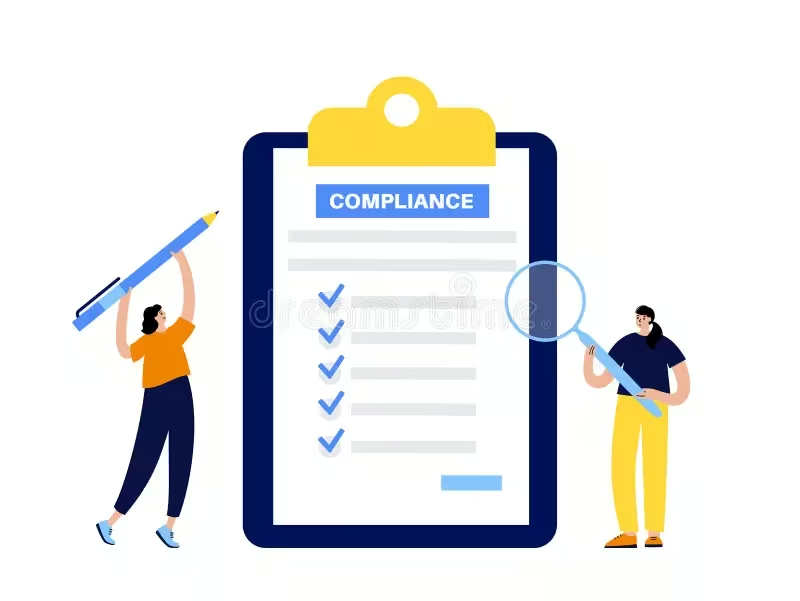
New York Tenant Screening Compliance Checklist
Create Your Free New York Adverse Action Notice in a PDF Fillable Form
Download fillable, attorney-reviewed New York tenant screening and lease forms designed to align with current law.
Complete Your Free Form Now
Published by Tenant Screening Background Check
Established 2004 · 20+ Years · All U.S. States & Territories · Statute-Based · Attorney-Reviewed
A Private Eye Reports™ service trusted by landlords, property managers, and attorneys.
© This guide is for informational purposes only and does not constitute legal advice. Consult with a qualified attorney for specific legal guidance.


