
🔍 Comprehensive Tenant Check
Uncover hidden risks before you hand over the keys — evictions, criminal history, credit, and more in one nationwide report.
 Watch Overview
🛡️ Run a Full Tenant Check Now
Get credit, eviction, criminal background, and nationwide court records in one FCRA-compliant report. Landlord-pays or applicant-pays options available.
🔍 What Is a Tenant Check?
A tenant check — also called a tenant screening report or tenant background check — is a comprehensive investigation of a rental applicant’s history pulled from nationwide databases. It goes far beyond what any application form can reveal and gives landlords the information they need to make confident rental decisions.

A full tenant check typically includes credit history, eviction records, criminal background, income verification, and identity verification. Large property management companies have run these checks as standard practice for decades — yet even they experience problem tenants when they don’t combine all data points. The key is knowing what to look for and how to interpret what you find.
📋 The 3 Key Areas of Every Tenant Check

⚖️ 1. Criminal History
Does the applicant have a record of serious criminal convictions? A nationwide criminal search covers all 50 states and catches out-of-state records that local-only searches miss — especially important if the applicant recently moved.
💳 2. Credit & Payment History
Has the applicant built a reliable track record of paying bills on time? Look beyond the score — patterns of late payments, collections, and charge-offs tell you more than a single number. See our tenant credit guide.
💰 3. Financial Stability
Is the applicant in a strong enough financial position to consistently pay rent? Verify income independently using pay stubs, bank statements, or tax returns. The standard benchmark is income of 3x the monthly rent.
A nationwide tenant check is the most effective way to answer all three questions accurately. State-only searches leave dangerous gaps — an applicant can have a history of evictions or criminal activity in another state that would never surface without a nationwide search.
🚨 Red Flags a Tenant Check Reveals
Many applicants appear perfect on paper. A professional tenant screening report regularly uncovers hidden risks that applicants don’t disclose — and often actively conceal.

🏛️ Hidden Evictions
The applicant claims a clean rental history, but the report shows multiple unlawful detainer filings and judgments for nonpayment. Prior evictions are the single strongest predictor of future evictions — tenants with one are 8x more likely to be evicted again.
💸 Dismissed Bankruptcy
An applicant discloses a bankruptcy but the report reveals it was dismissed — meaning debts weren’t discharged and serious financial problems likely continue. A dismissed bankruptcy is actually worse than a completed one.
🏠 Undisclosed Living Situations
The application states they’re living with family, but address records show a current apartment lease with overdue rent. Address history discrepancies are a major red flag worth investigating before approval.
⚠️ Concealed Criminal History
A serious criminal record goes unmentioned on the application. Nationwide searches catch out-of-state convictions that local checks miss — particularly important when applicants provide invalid SSNs intentionally to obscure their history.
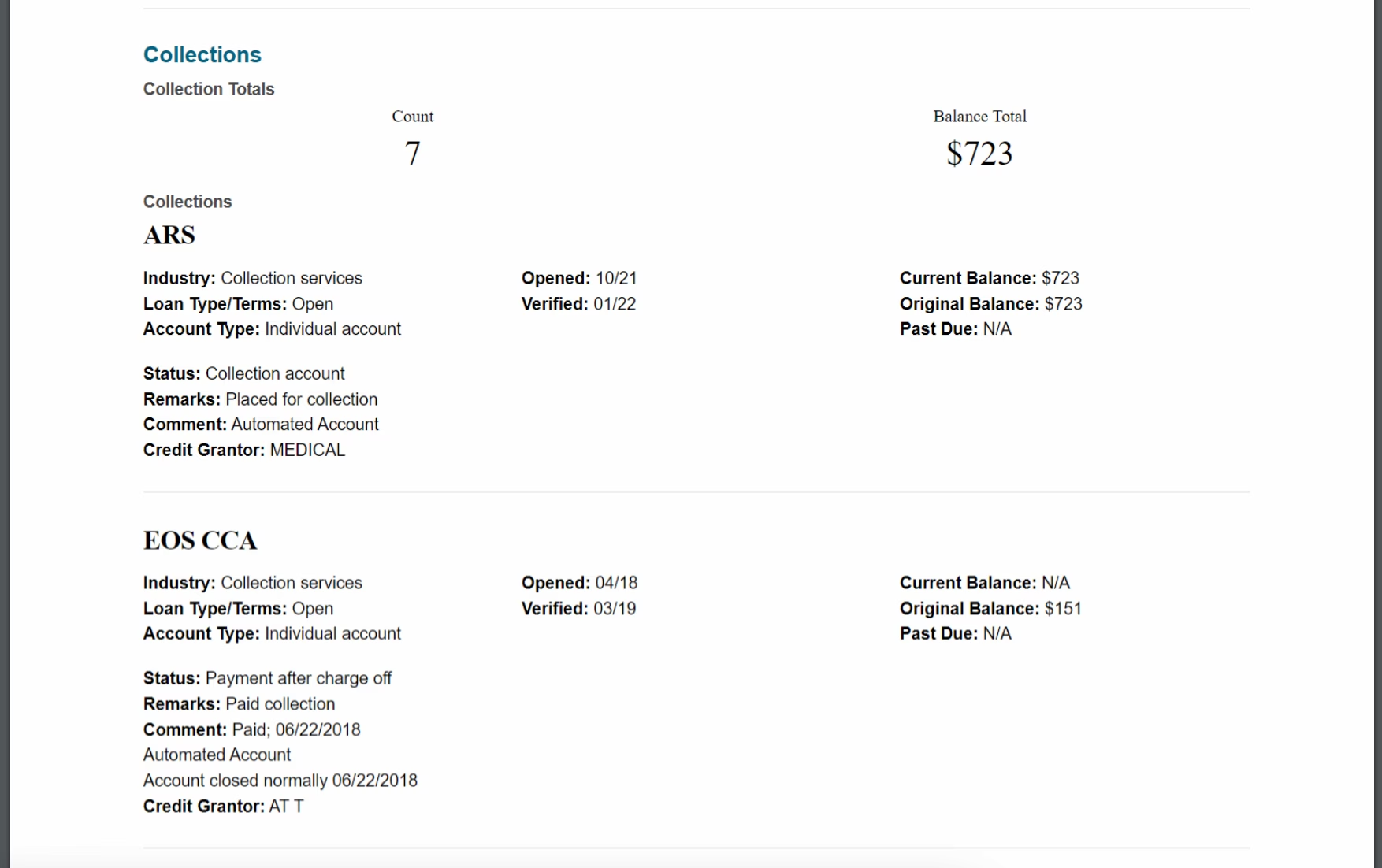
📄 What’s Inside a Tenant Screening Report
| Report Component | What It Shows | Why It Matters |
|---|---|---|
| 💳 Credit Report | Payment history, balances, collections, FICO score | Predicts financial reliability and bill-paying habits |
| 🏛️ Eviction Search | Nationwide court filings, unlawful detainers, judgments | Most reliable predictor of future eviction risk |
| ⚖️ Criminal Background | Felony/misdemeanor convictions, sex offender registry | Protects property, other tenants, and neighborhood |
| 🪪 Identity Verification | SSN validation, address history, alias names | Catches fraud attempts and invalid applications |
| 💸 Bankruptcy Records | Chapter 7/13 filings, dismissals, discharge status | Reveals serious financial distress history |
| 🏢 Employment Verification | Current employer, length of employment, income | Confirms income and employment stability claims |
🔑 How to Run a Tenant Check — Step by Step
-
Get Written Authorization First
The FCRA requires written consent before pulling any consumer report. Use a signed authorization form — never skip this step. Keep it on file for at least 5 years.
-
Collect a Complete Rental Application
You need full legal name, SSN, date of birth, current and prior addresses, employment information, and rental history. Use our free rental application to collect everything in writing.
-
Order the Report Through an FCRA-Compliant Service
You cannot access consumer reports directly — use a certified tenant screening service. View our screening options for landlord-pays or applicant-pays packages.
-
Review the Full Report — Not Just the Score
A 720 credit score means nothing if there are 3 prior evictions. Look at the full picture: eviction history, criminal background, address discrepancies, and the pattern of credit behavior — not just the number.
-
Verify Income Independently
Require 2–3 recent pay stubs, a bank statement, and/or the prior year’s tax return. Self-employed applicants should provide business bank statements. Standard benchmark: rent ≤ 1/3 of gross monthly income.
-
Apply Your Criteria Consistently
Fair Housing law requires consistent standards across all applicants. Document your minimum criteria before screening starts — minimum credit score, income requirement, eviction policy. Never make exceptions that could create liability.
-
Send Adverse Action Notice If You Decline
If you deny based on the report (even partially), you must send an adverse action notice listing the reporting agency used and the applicant’s right to a free copy of their report.
📊 Credit + Eviction + Criminal in One Report
Our comprehensive screening packages give you everything you need — nationwide eviction search, credit with FICO score, criminal background, and identity verification.
💰 The Math: Screening vs. Eviction
| Cost | Average Amount | Notes |
|---|---|---|
| 🔍 Full tenant screening report | $30–$50 | One-time per applicant |
| 🏛️ Court filing fee | $150–$500 | Varies by state/county |
| ⚖️ Attorney fees | $1,500–$5,000+ | More if contested |
| 🏠 Lost rent during eviction | $2,000–$8,000 | 2–4 months typical |
| 🔧 Property damage repairs | $1,000–$5,000 | Beyond normal wear |
| 🔄 Turnover/re-listing costs | $500–$2,000 | Cleaning, advertising |
| Total Eviction Cost | $5,000–$20,000+ | vs. $30–50 to screen |
❓ Frequently Asked Questions
🚨 Don’t Rent to a Problem Tenant
A $40 screening report is the best investment you’ll make as a landlord. Find out everything about your applicant before they move in.
⚖️ Legal Disclaimer
This guide provides general information about tenant screening and is not legal advice. Always comply with the Fair Credit Reporting Act (FCRA) and applicable state and local laws when screening tenants. Consult a qualified attorney for guidance specific to your situation. Last updated: .


